
From Driver Allowances to Managed Corporate Leasing: When Company Cars Make More Sense
For a lot of UAE businesses, the simplest way to get employees on the road is to add a car allowance to the salary package. Finance sets a number, HR adds it to the offer, and the driver chooses their own vehicle and rental or leasing arrangement in Dubai, Abu Dhabi or other emirates.
That works for a while. But as headcount grows and more roles need cars, the real cost and risk of a loose allowance policy start to show up – in inconsistent vehicles, blurred responsibilities and hard-to-track spend across the UAE.
Why many UAE businesses start with driver allowances
On paper, a driver allowance looks like the least complicated way to support employee mobility. Instead of running a corporate vehicle programme, the company pays a fixed monthly or annual amount and lets staff manage their own car or rental choices.
There is no need to negotiate leasing contracts, no company vehicles on the balance sheet and fewer internal approvals. For smaller businesses or early-stage operations in Dubai and Abu Dhabi, this can feel like a sensible way to stay flexible.

Where cash allowances start to break down
The challenges begin when the allowance policy scales – more drivers, more trips between emirates, more client-facing roles and more variation in how the allowance is used.
- Inconsistent vehicles on the road – some drivers choose newer, well-maintained cars, others extend short-term rentals or use older vehicles. The company brand shows up differently at each client site.
- Hidden cost drift – allowances are often set once and rarely revisited. Over time, extra ad-hoc rental top-ups, fuel reimbursements and parking or Salik support creep in, especially for busy teams.
- Blurred risk and responsibility – insurance, fines, vehicle condition and accident handling sit in a grey area between the company, the employee and whichever rental provider they happen to use in the UAE.
- Little visibility across Dubai, Abu Dhabi and beyond – finance sees a line called “car allowance” and a mix of expense claims, but not a clear view of actual corporate vehicle usage, downtime or total cost.
- Admin noise for HR and managers – exceptions become the norm: higher allowance for this role, extra support for that team, temporary increases during busy periods or when projects ramp up.
On the surface, it still looks like a single line item. In reality, the business is running a scattered vehicle policy without the guardrails of a proper corporate car leasing programme.
Signs your company is ready for a structured vehicle programme
Most companies don’t wake up one day and decide to move from allowances to a managed corporate leasing programme. They feel pain first – especially in operations, finance and HR.
- Headcount and mileage have grown, and more roles now rely on cars every day.
- Managers are approving more one-off rental extensions and “temporary” increases to the allowance.
- Client-facing staff arrive in very different types of vehicles, depending on their own choices or rental plans.
- Finance struggles to compare the true cost of allowances versus a formal car leasing programme in the UAE.
- HR is dealing with disputes around accidents, insurance, fines and vehicle condition.
At that point, the question is less “Is an allowance simpler?” and more “Is this still the best way to run a corporate vehicle programme for our company?”
How managed corporate leasing works differently
A structured corporate car leasing model replaces individual allowances with a clear, company-wide framework for vehicles. Instead of every employee managing their own rental, the business runs a managed fleet programme across Dubai, Abu Dhabi and other emirates.
- Defined eligibility and vehicle classes – roles are mapped to specific vehicle categories and mileage bands, not just a flat cash amount.
- Fixed monthly leasing costs – predictable Opex per vehicle, with transparent handling of extras such as insurance, fines and Salik.
- SLA-backed continuity – clear response and replacement targets when vehicles are off the road, especially for critical business roles.
- Central visibility – usage, spend and exceptions can be tracked by site, emirate, department or cost centre.
- Consistent brand experience – client-facing teams arrive in vehicles that reflect the company’s standards, not individual choices.

From driver allowance to company vehicles: a simple example
Imagine a facilities services business with supervisors and technicians travelling daily between sites in Dubai and Abu Dhabi. Each supervisor receives a car allowance, topped up when workloads spike or when their personal rental contract becomes more expensive.
- Some supervisors drive compact hatchbacks; others choose larger SUVs with higher fuel and rental costs.
- When a vehicle is off the road, the supervisor sorts out their own short-term rental and expenses it back.
- Finance sees a mix of allowances, rental bills and fuel claims, but no single view of fleet performance or downtime.
Under a managed corporate leasing model, those same supervisors would sit in a defined vehicle band, with agreed mileage and service levels. Vehicles are sourced centrally, downtime is tracked and replacements are coordinated through one programme instead of dozens of individual arrangements.
Where daily rental still fits – and where it doesn’t
Short-term car rental in the UAE still has a role. It is useful for visiting staff, short projects, trial periods or unexpected spikes in activity where adding permanent programme capacity would not make sense.
- Daily or weekly rental makes sense for temporary or highly variable needs.
- Managed corporate car leasing makes more sense for core business roles that need reliable, compliant company vehicles every month.
What Glide Mobility adds on top
Glide Mobility sits on top of licensed UAE leasing partners and helps companies move from scattered allowances and ad-hoc rental towards a vendor-neutral, managed vehicle programme.
- One framework for company vehicles across Dubai, Abu Dhabi and other emirates.
- Service levels that reflect how critical each role is, not just how much you pay today in allowances.
- Multi-supplier sourcing to balance cost, continuity and vehicle availability.
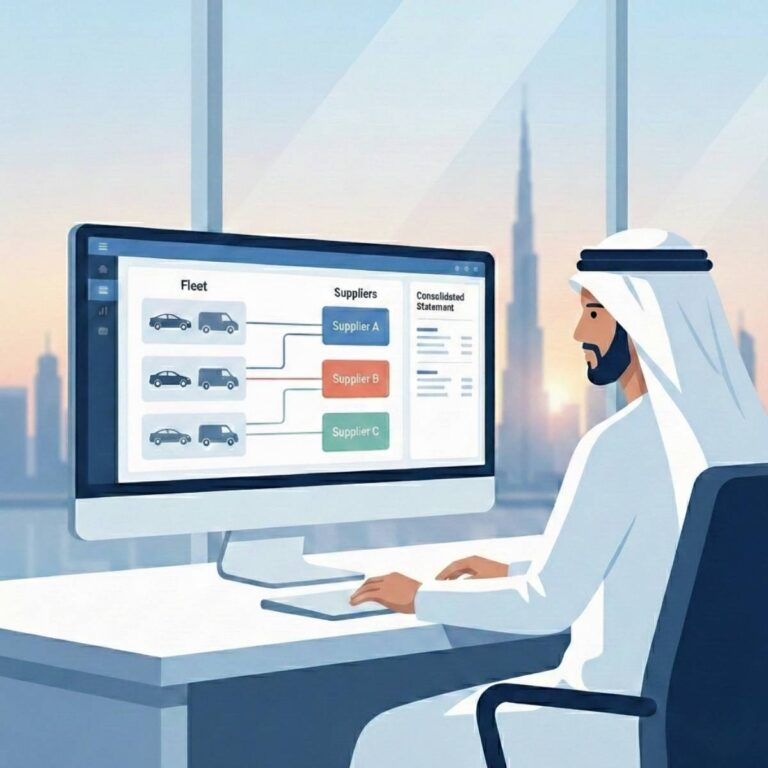
- One contract and one consolidated monthly statement instead of a tangle of allowances and rentals.
A practical way to move from allowances to a fleet programme
- Identify the roles and routes that depend most on reliable vehicles today.
- Compare current allowance and rental spend with a structured corporate leasing option for those roles.
- Pilot a small company-car pool or managed programme segment, with clear KPIs around downtime, cost and satisfaction.
- Use the results to decide how far and how fast to move more drivers from allowances into the corporate vehicle programme.
For many UAE businesses, the real question is no longer whether driver allowances are easy to administer, but whether they still offer the best value, control and continuity for the company’s cars – and for the teams who rely on them every day.
Bring structure to your UAE fleet