
Hidden Costs in Corporate Car Rental: How UAE Businesses Can Control Spend Without Slowing Operations
Corporate mobility in the UAE often starts with something simple: book a car when you need it. A site manager in Dubai calls a daily rental company. A team in Abu Dhabi requests a short-term van. Another department uses a different car rental app entirely.
On the surface, this looks flexible and low-commitment. You only rent vehicles when the business needs them. But over time, the mix of daily and weekly rental can hide real costs that never appear clearly in one place.
This post looks at where those hidden costs show up in corporate car rental, when it makes sense to move towards structured vehicle leasing, and how UAE companies can control spend without slowing operations.
Where corporate car rental quietly becomes expensive
Daily and weekly rental is perfect for genuine short-term needs: a project kick-off, an event in Dubai, a visiting team in Abu Dhabi. The cost problem starts when “temporary” car rental becomes the default way your company covers regular routes and staff mobility.
- Last-minute bookings: Vehicles are often requested at short notice, so you pay peak daily or weekly rental rates instead of predictable corporate leasing prices.
- Delivery and collection fees: Each car or van that is dropped to a site in the UAE and picked up again adds small charges that rarely show on a single consolidated statement.
- Upsold protection and extras: At the counter or in the app, teams add extra insurance, upgraded damage waivers or premium vehicle classes on a case-by-case basis.
- Salik, fines and fuel charges: Tolls, penalties, refuelling and “admin fees” can be spread across many invoices, making it hard for a business to see the real cost of using rental vehicles in Dubai and Abu Dhabi.
Individually, none of these items looks dramatic. Combined across dozens of vehicles and multiple cities, they become a material cost line for the company.

Hidden costs rarely sit on a single invoice; they spread out across many small rental bookings.
The operational cost of managing ad-hoc rental
The second layer of hidden cost is time. When your corporate fleet is built on short-term car rental, people spend more effort arranging vehicles than running the business.
- Multiple booking channels: Different teams use different apps, phone numbers and websites for rental requests.
- Unclear approvals: Managers approve bookings in WhatsApp, email or verbally, with no single view of why each car was rented.
- Finance chasing details: Accounts teams in Dubai and Abu Dhabi manually match invoices, cost centres and business units.
- No clear utilisation picture: It is difficult to see which vehicles are essential to operations and which are just convenient to rent.
For a growing UAE company, this friction feels like “just admin” until you add up the hours spent coordinating rentals across sites, cities and business lines.

Admin time is a hidden cost: every manual rental booking pulls attention away from core business activities.
Signals that it is time to move beyond short-term car hire
Not every UAE business needs corporate vehicle leasing on day one. But there are clear signs that ad-hoc rental has reached its limit.
- Regular, repeated bookings: The same routes, drivers or sites book rental cars and vans every month.
- Multiple cities and sites: Your company runs operations in Dubai, Abu Dhabi and the Northern Emirates with no single view of active vehicles.
- Rising monthly spend: Finance can see that rental costs are growing but cannot easily separate essential spend from convenience.
- Pressure on downtime: When a rental vehicle is off the road, there is no guaranteed replacement time linked to service levels or business impact.
At this point, the real question becomes: “Which vehicles should move from short-term rental to structured corporate leasing?”
Using corporate vehicle leasing to control spend
Structured corporate car and van leasing does not replace all rental in the business. It creates a stable base of vehicles that are always needed, then leaves genuine short-term needs to rental companies.
- Predictable monthly pricing: Vehicles that are in constant use move to leasing contracts with agreed monthly rates.
- Clear service levels: Replacement times and support levels are defined by business impact, not by ad-hoc negotiations at branch level.
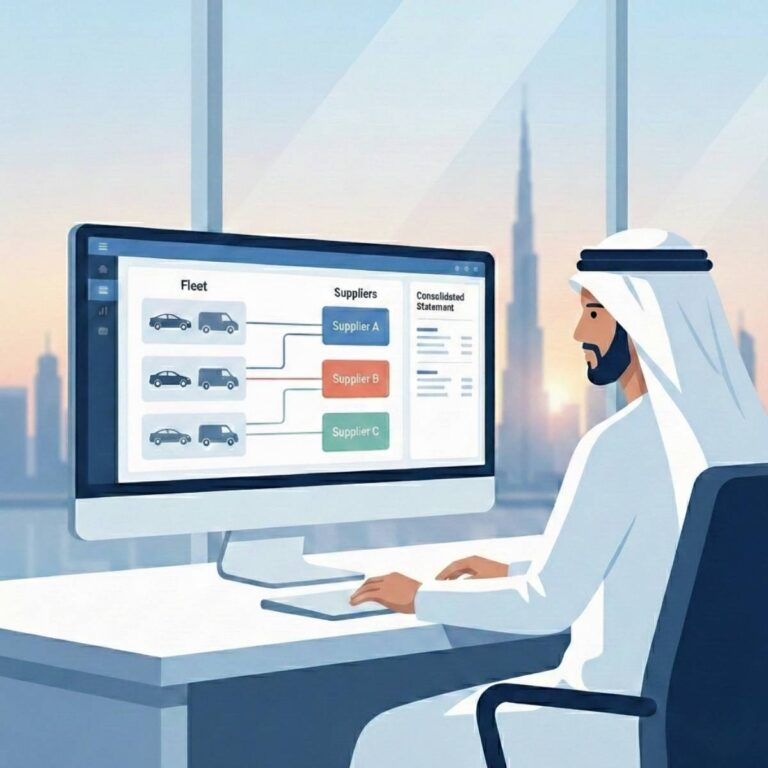
- Consolidated statements: Base leasing, Salik, fines and fuel can be reported in a way that finance teams can map back to cost centres.
- Rental where it makes sense: Daily and weekly rental remains available for genuine peaks, seasonal projects and short-term staff moves.

The goal is a mixed fleet: a stable leased core plus flexible rental capacity for genuine spikes in demand.
Simple steps UAE companies can take now
You do not need a full fleet transformation project to start controlling hidden costs. A few focused actions already make a difference for operations and finance.
- Map your “always-on” demand: Identify vehicles that are effectively rented every month for the same role or route in Dubai, Abu Dhabi or other Emirates.
- Group by business impact: Separate essential vehicles (client-facing, revenue-critical) from those that are convenient but not critical.
- Consolidate suppliers: Reduce the number of rental and leasing partners so you can compare performance and negotiate structure, not just price.
- Ask for clearer statements: Request that base rent or leasing, Salik, fines and fuel are itemised separately so you can see where spend really goes.
How Glide Mobility helps control spend without slowing operations
Glide Mobility is a managed corporate vehicle programme for UAE companies. We work with multiple licensed leasing partners and rental providers, then manage the combined setup as one structure for your business.
- We help you decide which vehicles should move from ad-hoc rental into structured corporate leasing.
- We group vehicles into clear service levels, so replacement times match the true cost of downtime.
- We consolidate charges from partners into one monthly statement, separating base leasing from variable items.
From the perspective of your UAE business, the objective is simple: keep vehicles available for the people who need them, while bringing real control to what you spend on car rental and leasing every month.
Bring structure to your UAE fleet