Commercial Vehicle Sourcing in the UAE: Sourcing What Your Operations Team Actually Needs
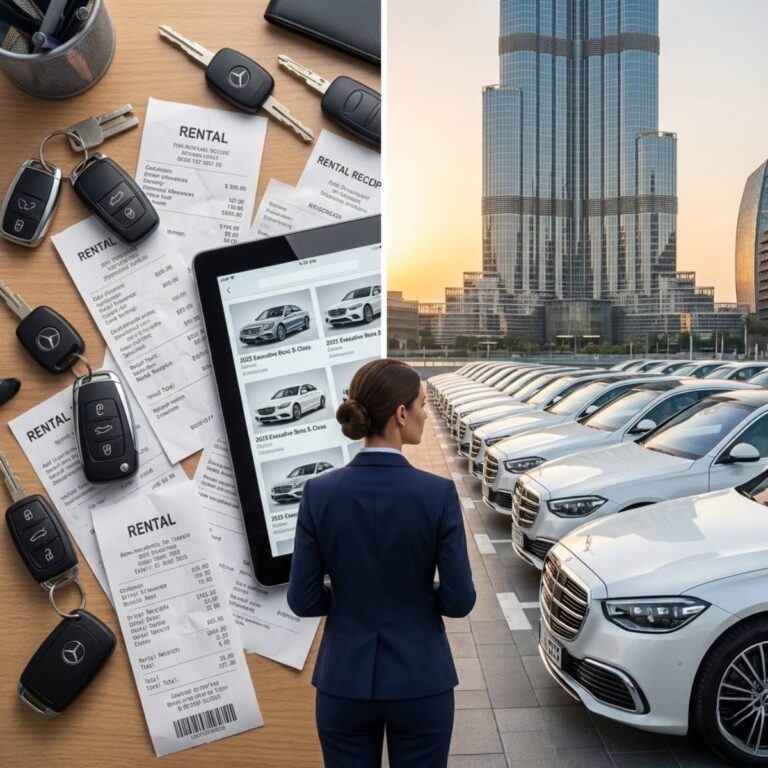
Most corporate procurement initiatives focus heavily on the sleek aesthetics of executive sedans and family-friendly SUVs. However, behind the glass towers of downtown Dubai and the expanding industrial quarters of Abu Dhabi, the true pulse of an organisation relies on entirely different assets. Western-style procurement models frequently look to standard multi-supplier corporate car leasing setups to handle personnel movement, but operations managers, facilities supervisors, and logistics leads face a persistent bottleneck when sourcing heavier utility options. The hard truth is that the real heavy lifting of your business requires rugged commercial vehicle rental structures rather than executive transport, creating a critical operational disconnect that silently leaks budget efficiency.
When automated enterprise systems route all transport procurement queries to traditional passenger vehicle channels, custom operational requirements get lost in translation. A field technician cannot stack heavy distribution valve components or high-voltage cabling assets into the boot of a compact sedan, nor can an engineering crew arrive at an active industrial zone in a premium crossover. Bridging this operational divide requires an analytical evaluation of specialized logistics assets, a clear understanding of why these workhorses are notoriously difficult to source under standard corporate framework agreements, and a modern approach to managing mixed business utility fleets under a unified digital umbrella.
What types of commercial vehicles do UAE business operations actually require?
In the fast-paced macro-environment of 2026, operational flexibility is everything. UAE businesses operate across complex, diverse logistical corridors that demand highly specific, non-passenger transportation. When we look past the generic passenger car options, several foundational commercial segments emerge as absolute operational necessities across the logistics, facilities management, construction, and engineering sectors.
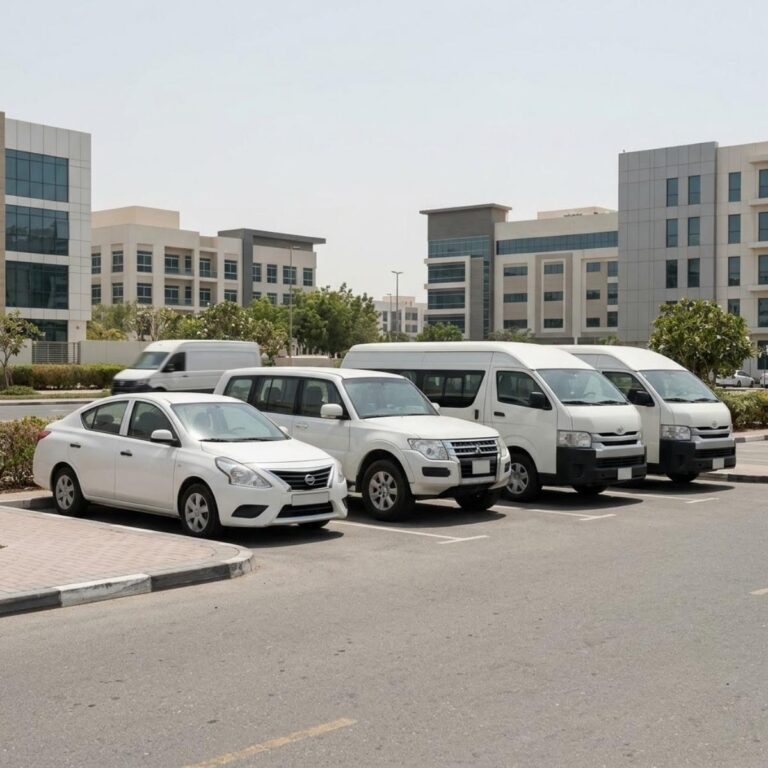
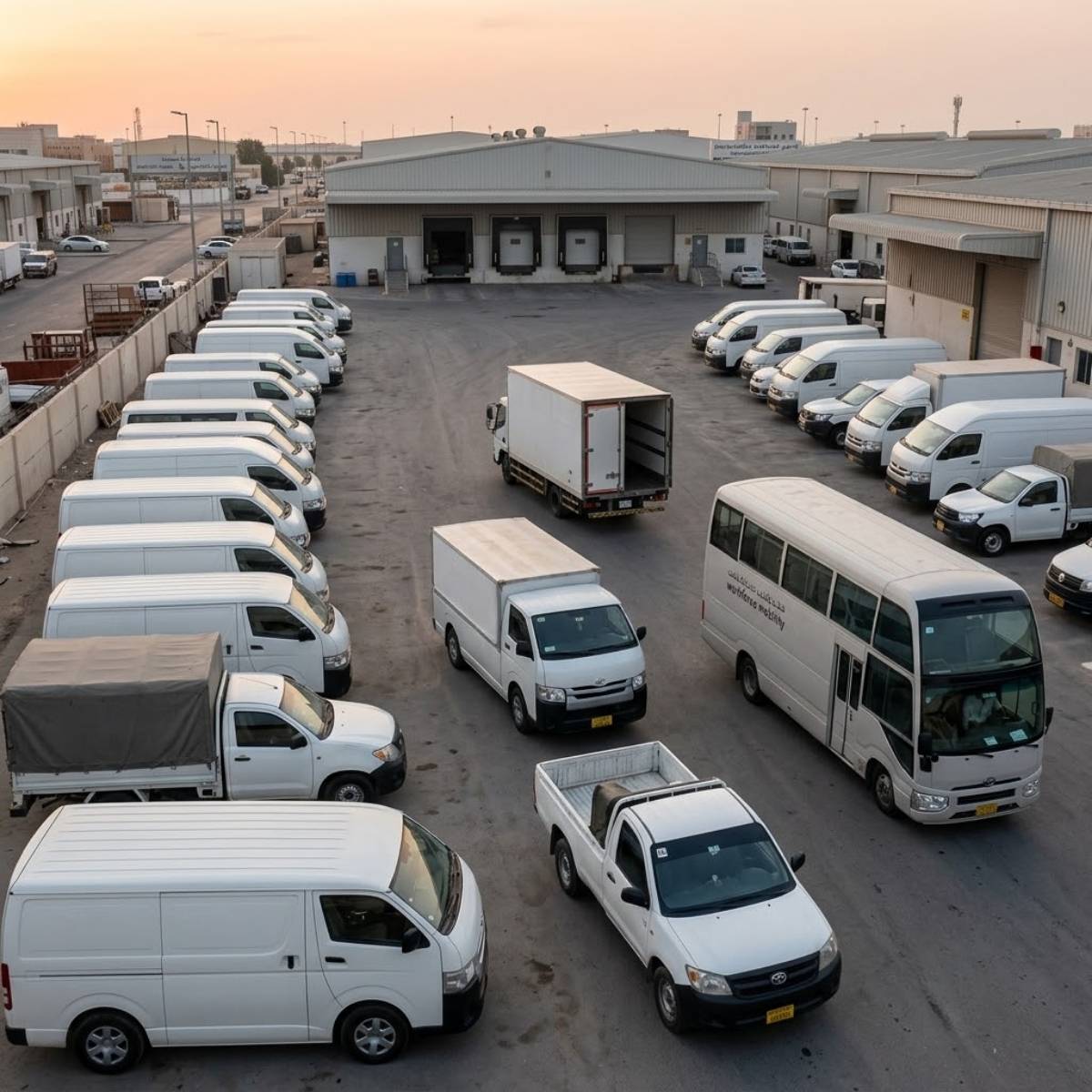
For rapid city logistics inside dense urban centres, businesses look for dependable cargo van rental options. Medium-sized delivery businesses, e-commerce platforms, and daily courier operations rely on variants like a standard panel van or a dedicated Toyota Hiace rental to handle high-volume last-mile distribution across narrow neighbourhood streets. Furthermore, if the organisation is moving temperature-sensitive medical supplies, organic groceries, or gourmet foods across multi-emirate retail channels, a specialized chiller van becomes the mandatory tool to ensure strict cold chain compliance under municipal safety guidelines.
When moving outside urban core areas into active construction hubs, desert oilfields, or industrial field-service environments, the demand shifts entirely toward structural payload capacity and rugged durability. Here, operations teams frequently depend on a targeted pickup truck rental to handle rough terrain, tools, and heavy mechanical components. For light cargo handling and rapid maintenance response, a nimble 1 ton pickup rental offers the ideal compromise between a standard passenger footprint and industrial utility, allowing technical crews to access tight basement parking zones easily. Conversely, major construction materials suppliers, MEP contractors, and heavy infrastructure teams scale up their operations utilizing a heavy-duty 3 ton pickup rental to confidently move massive fabrications, scaffolding, and raw industrial components across expansive project sites.
Workforce transport also scales up significantly beyond the five-seater limits of standard corporate passenger cars. When shifting technical teams to remote project sites, managing hospitality shuttle routes, or organizing daily factory staff commutes, high-capacity passenger options come into play. Facilities management supervisors and project coordinators frequently source a coaster bus rental to move teams of 20 to 30 personnel efficiently, keeping massive field operations moving reliably without the administrative chaos of arranging a dozen smaller unmanaged vehicles.
Why are commercial vehicles harder to source on structured corporate terms?
While finding a passenger vehicle through typical consumer-focused monthly car rental companies lists is incredibly straightforward, commercial assets present completely different institutional friction. Sourcing high-quality options for a van rental for business program remains notoriously difficult under structured corporate terms due to specific regional compliance and financial asset hurdles, introducing heavy corporate exposure to the hidden costs of corporate car rental setups.
First, commercial vehicles must comply with rigid transport authority regulations that vary across different emirates, such as the Roads and Transport Authority (RTA) in Dubai or the Integrated Transport Centre (ITC) in Abu Dhabi. These utility vehicles often require specialized commercial company registrations, specific commercial plates, mandatory corporate branding approvals, and strict safety modifications like electronic tracking devices or speed limiters. Traditional retail rental agencies simply do not possess the B2B compliance infrastructure or regulatory expertise required to manage these complex institutional demands seamlessly, forcing operations teams to seek alternative unmanaged channels.
Second, volatile asset degradation and heavy maintenance overhead make traditional leasing networks risk-averse when handling commercial fleets. Unlike an executive commuter SUV that travels primarily on pristine urban highways, a commercial vehicle works on gravel yards, hot loading docks, and remote industrial perimeter roads. This rugged operational environment causes highly volatile degradation patterns. Standard financing and leasing structures struggle to accurately predict residual values for custom or hard-worked utility fleets, forcing traditional providers to either shy away from commercial assets entirely or demand restrictive, highly uncompetitive lease structures that penalize operational usage.
What should operations teams look for in a commercial fleet partner?
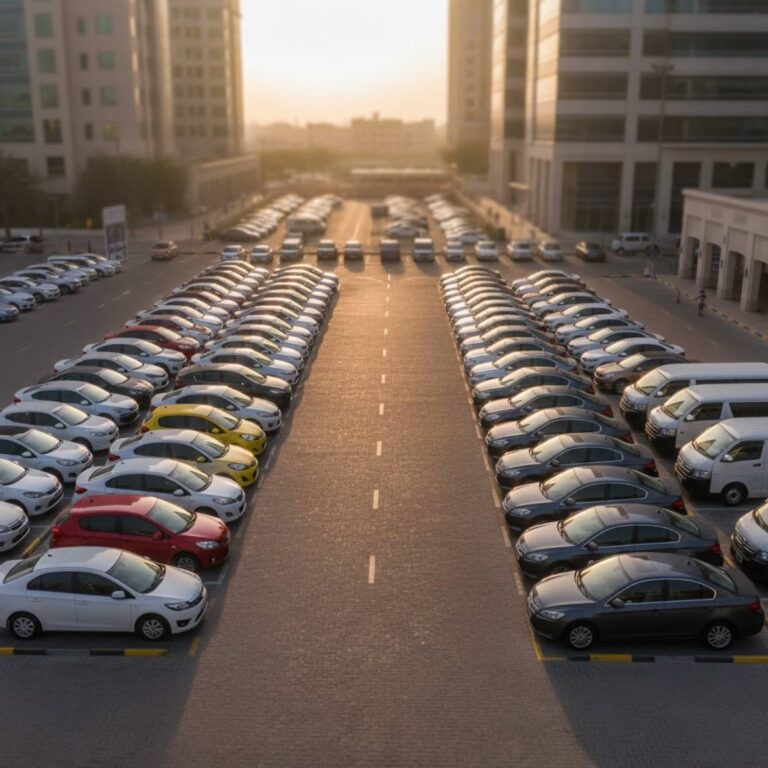
When you scale your logistics and transition to a robust fleet rental (20/mo) program, perhaps managing twenty or more working assets monthly—your partner selection criteria must move far beyond standard price comparisons. A premium commercial partner needs to function as a strategic extension of your supply chain operations.
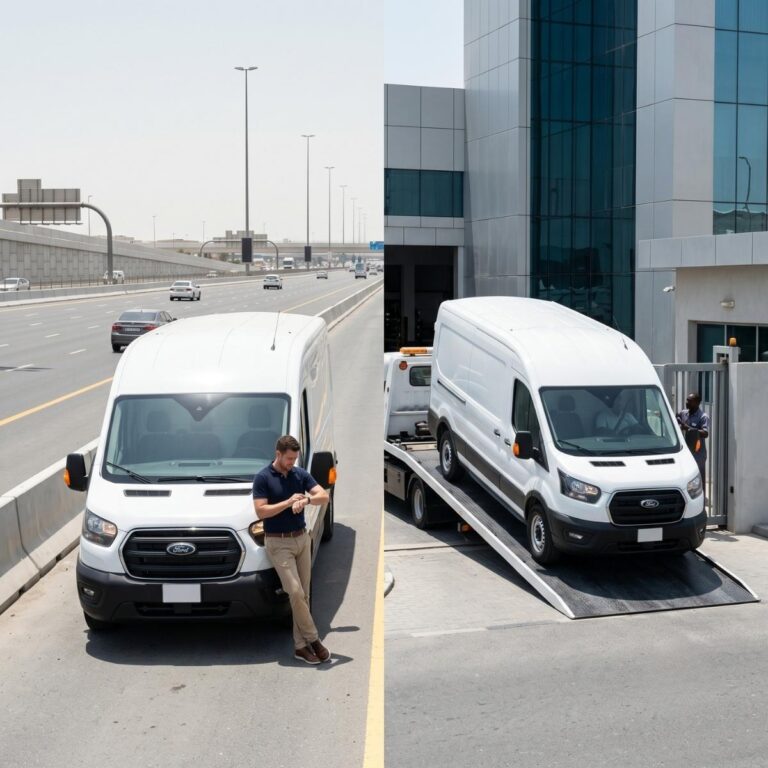
“The real cost of a commercial utility vehicle isn’t the upfront monthly lease tariff, it is the direct impact of operational downtime. When an unmanaged cargo van breaks down on a delivery route, the business loses client trust and project momentum instantly.”
Logistics and facilities management routes do not stop at emirate borders; your vehicles will cross between Dubai, Abu Dhabi, and the Northern Emirates daily. A premium partner must offer systematized, cross-border roadside support and preventative maintenance scheduling that respects your timeline, tracking toll data, Salik cross-references, and routine safety checks under one integrated digital portal.
|
Vehicle Category |
Recommended Fleet Application |
Dubai Availability |
Abu Dhabi Availability |
Northern Emirates Availability |
|---|---|---|---|---|
|
Cargo & Panel Vans |
Last-mile retail delivery, e-commerce distribution, inner-city technical maintenance. |
High (Immediate deployment) |
High (Standard fleet) |
Moderate (Requires booking) |
|
1-Ton Pickups |
Field-engineering response, light construction tools, on-site supervisor mobility. |
High (Widespread) |
High (Industrial sectors) |
High (Remote area support) |
|
3-Ton Pickups |
Bulk construction materials transport, heavy industrial fabrication delivery. |
Moderate (High demand) |
High (Mussafah/ICAD zones) |
Moderate (Industrial yards) |
|
Chiller Vans |
Cold-chain pharmaceuticals, perishable FMCG, catering and hotel supply. |
High (Specialised fleets) |
Moderate (Logistics parks) |
Limited (Pre-allocation required) |
|
Coaster Buses |
Construction workforce transport, hotel guest shuttle, corporate staff mobility. |
High (Corporate fleets) |
High (Oil/Gas & Project sites) |
High (Manufacturing hubs) |
How does Glide Mobility unify mixed commercial and passenger operations?
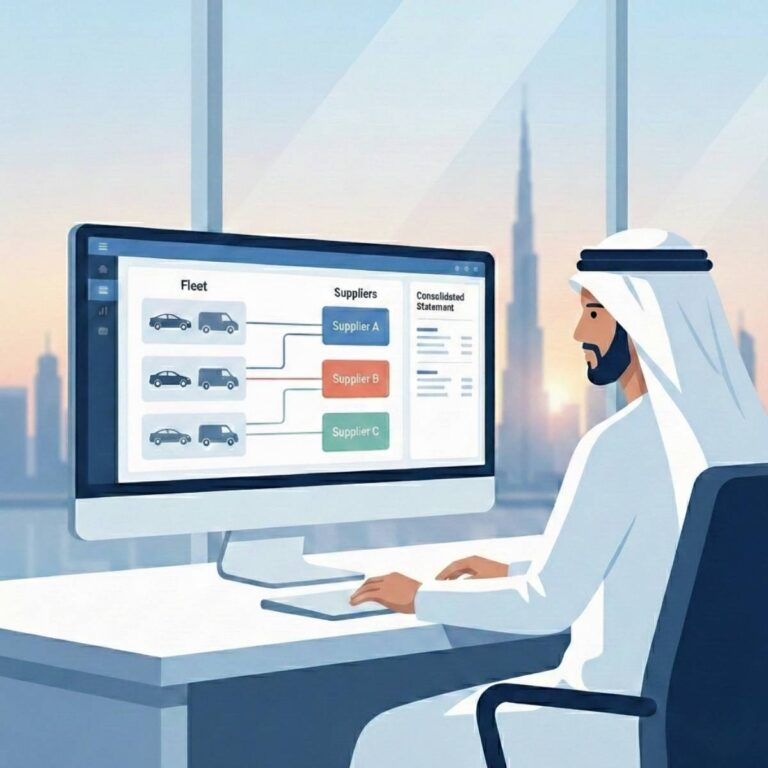
Glide Mobility operates as an intelligent, vendor-neutral infrastructure layer that brings these heavy-duty commercial vehicles under the exact same streamlined corporate program as your executive passenger cars. By abstracting the fragmentation between multi-emirate leasing providers and specialized commercial rental vendors, Glide eliminates the administrative friction traditionally associated with mixed utility operations.
Through a single, unified digital interface, procurement and operations leads gain total clarity over asset distribution, maintenance tracking, local transport compliance milestones, and pass-through costs like Salik tolls and municipal parking. Shifting away from legacy strategies like unmanaged driver allowances or ad-hoc receipt tracking ensures your field teams stay fully equipped, compliant, and mobile—no matter how fast your logistical operations expand across the country.
Bring structure to your UAE fleet