
Corporate Car Rental and Vehicle Leasing in Abu Dhabi: What Businesses Operating Outside Dubai Need to Know
Most corporate car rental and vehicle leasing providers in the UAE are headquartered in Dubai. Their fleets sit in Dubai yards, their operations teams work from Dubai, and their replacement logistics are built for Dubai distances. For businesses running fleet operations in Abu Dhabi, that means thinner stock, longer replacement wait times, and service levels that quietly underperform compared to what the same provider delivers up the E11.
Abu Dhabi businesses running 10 or more vehicles on corporate rental or leasing contracts typically experience replacement times 40 to 60 percent longer than equivalent operations in Dubai.
If your business operates across Mussafah, KIZAD, Saadiyat Island, or the Al Ain corridor, the car rental and leasing experience is structurally different from Dubai. Understanding those differences is the first step toward getting service levels that match your operations.
Why does Abu Dhabi get slower fleet service than Dubai?
It comes down to geography, stock allocation, and economics.
Abu Dhabi’s operational footprint is far more spread out than Dubai’s. The distance from KIZAD to Saadiyat Island is roughly 80 kilometres. Mussafah to Al Ain is over 140 kilometres. A Dubai-based rental company promising a replacement vehicle “within a few hours” is making a promise calibrated for Deira-to-JLT distances, not Abu Dhabi’s reality.
Most rental and leasing companies keep 70 to 80 percent of their available fleet in Dubai, because that is where the volume sits. Abu Dhabi branches carry a smaller selection. If you need a specific vehicle type, a van, a pickup, or a replacement for an off-road SUV, the car often has to come from Dubai. That adds transit time on top of the response time.
Abu Dhabi’s corporate rental market is also smaller than Dubai’s, which means fewer providers compete aggressively on service. Businesses end up accepting what is available rather than demanding what they need.
What fleet needs do different Abu Dhabi zones create?
Abu Dhabi is not one market. Each zone has distinct vehicle requirements, distances from rental hubs, and operational patterns. A car rental setup that works for an office on the Corniche will not work for a contractor in KIZAD.
Mussafah and ICAD
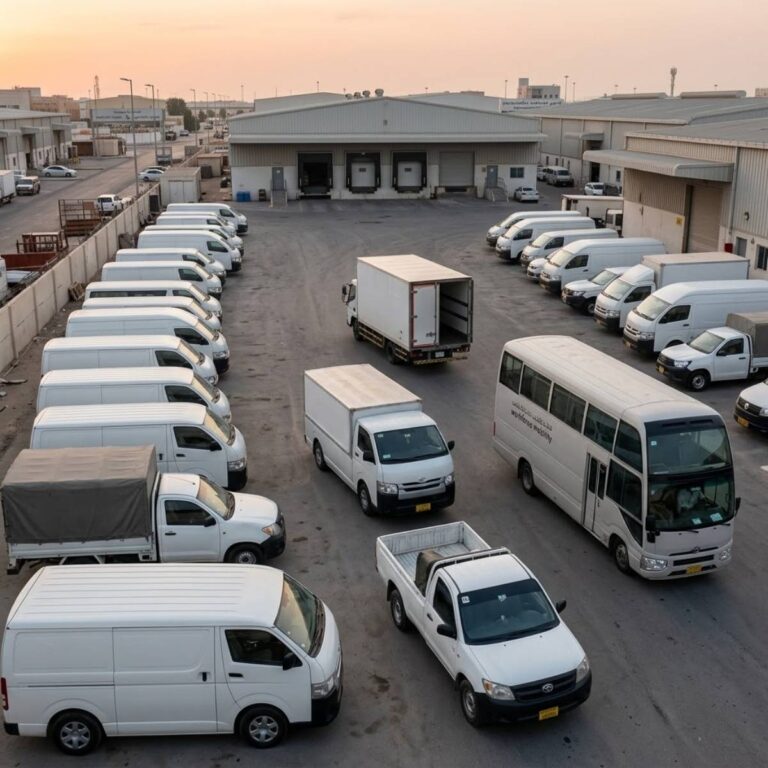
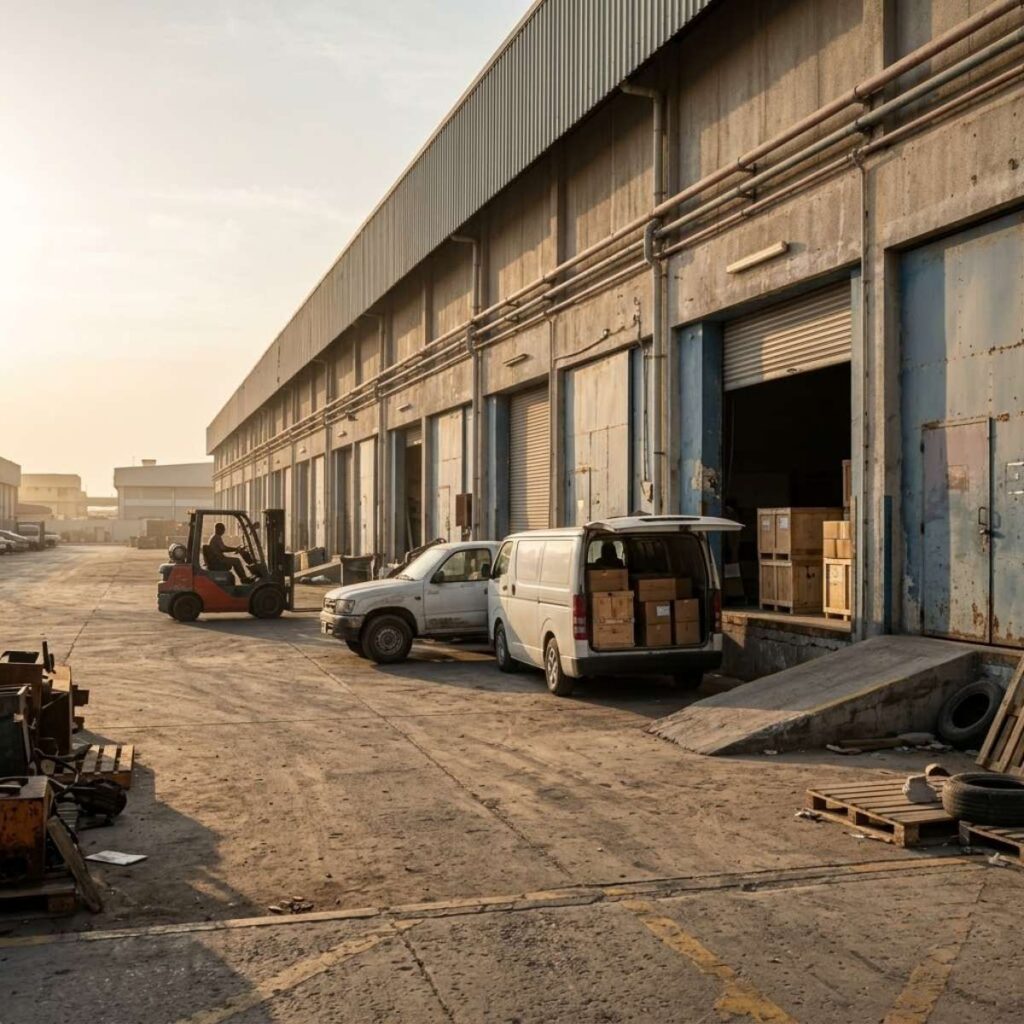
The industrial heart of Abu Dhabi. Manufacturing, MEP contractors, oil and gas support companies, and logistics operators are concentrated here. The fleet demand is overwhelmingly for pickups, cargo vans, and trucks rather than passenger cars. Commercial vehicle rental stock is limited locally, and most replacements are dispatched from Dubai, adding hours to every incident.
KIZAD
Khalifa Industrial Zone sits over 60 kilometres from Abu Dhabi city centre. Logistics companies, warehousing operations, and free zone tenants need pickups, sedans for supervisors, and buses for crew transport. Very few car rental or leasing providers deliver directly to KIZAD. Replacement wait times can stretch past a full working day.
Saadiyat and Yas Islands
Abu Dhabi’s hospitality, events, and entertainment hub. Hotels, resorts, and venues on these islands need guest shuttle minibuses, staff cars, and event support vehicles that scale up and down with seasons, conferences, and race weekends. The challenge is not distance but demand spikes. Standard monthly car rental agreements cannot flex fast enough when a resort suddenly needs six extra vehicles for a sold-out week.
City centre and Corniche
The best-served part of Abu Dhabi for car rental and leasing. Government entities, corporate offices, and consulting firms on Al Maryah Island and the Corniche need sedans, SUVs, and pool cars. Availability is reasonable, but service level commitments are rarely formalised. Most businesses here lease vehicles without written replacement SLAs, which means downtime is handled reactively rather than by design.
Al Ain corridor
Over 140 kilometres from Abu Dhabi city. Agriculture, education institutions, and remote project sites operate here with almost no structured car rental or vehicle leasing coverage. Businesses in Al Ain typically self-manage their fleet or rely on informal arrangements, which breaks down the moment a vehicle needs replacing.
What problems do Abu Dhabi businesses face with Dubai-based providers?
The issues follow a pattern. They are not about bad intent from the rental or leasing provider. They are about a model that was designed for a different city.
- Replacement delays that stretch well beyond the promised window, because the backup car has to travel from a Dubai yard. A “4-hour” replacement becomes a full working day.
- Vehicle class mismatches where the replacement offered is not the same type. Your team needs a pickup but receives a sedan because that is what the Abu Dhabi branch has in stock.
- Limited commercial vehicle availability for vans, pickups, and buses. Abu Dhabi branches carry passenger cars. Commercial vehicle rental stock is almost always held in Dubai.
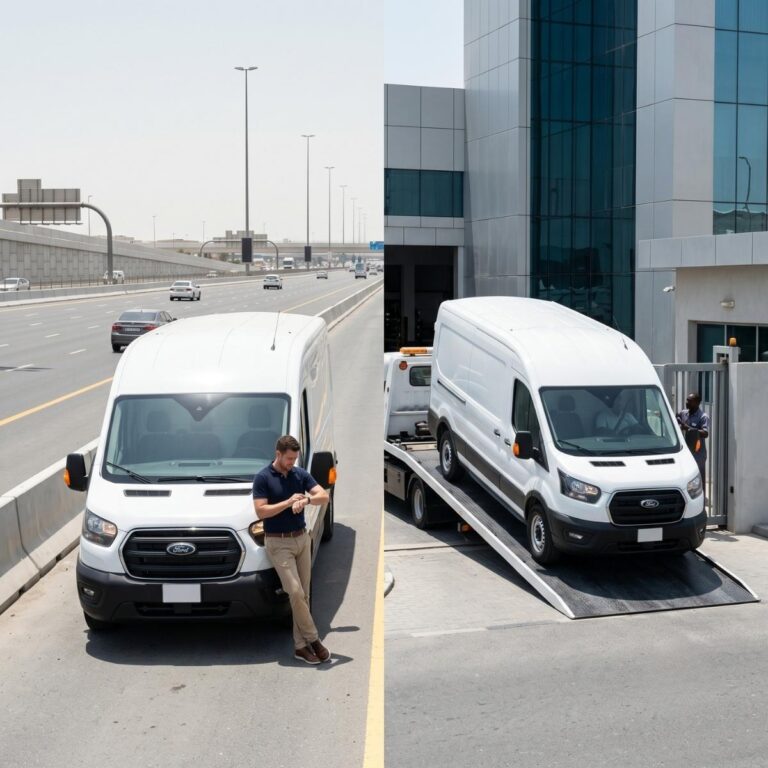
- Maintenance and roadside response gaps in zones like KIZAD and along the Al Ain road, where tow trucks and service vehicles take significantly longer to reach.
- Single-supplier dependency where the business relies on one car rental company for all Abu Dhabi vehicles because no other provider offered competitive terms for the emirate.

What should Abu Dhabi businesses look for in a fleet rental or leasing partner?
The criteria are different from what you would prioritise in Dubai. In Abu Dhabi, the ability to deliver matters more than the ability to quote.
- Local stock in Abu Dhabi rather than a promise to deploy from Dubai. Ask where vehicles are physically held, not where the company is registered.
- Written replacement SLAs specific to Abu Dhabi, not a generic UAE-wide promise. A 10-hour target should mean 10 hours in Mussafah, not 10 hours from a Dubai yard.
- Commercial vehicle capability including van rental, pickup rental, and bus leasing under the same programme as passenger cars.
- Multi-supplier coverage so you are not dependent on a single provider. If one leasing partner cannot cover KIZAD, another can.
- Roadside and maintenance response that covers Abu Dhabi’s industrial and remote zones, not just the city centre.
Which Abu Dhabi sectors rely most heavily on fleet operations?
Abu Dhabi’s economy is structurally different from Dubai’s, and that shapes fleet demand.
Oil and gas support services are concentrated in Mussafah, ICAD, and around offshore supply bases. These businesses need pickups, SUVs, and crew transport vehicles that handle industrial conditions and long daily distances. Downtime on a site supervisor’s vehicle can delay an entire shift.
Government and semi-government entities on Al Maryah Island and in the city centre run large, structured fleets with formal procurement processes. For these organisations, service level compliance and reporting matter more than headline pricing.
Hospitality and tourism operators on Saadiyat and Yas Islands need guest shuttles, staff cars, and event support fleets that scale with seasons. A resort that needs two extra vehicles in January might need ten during Formula One week.
Construction and infrastructure projects across KIZAD, the Midfield Terminal corridor, and southern expansion zones need pickups and vans for site engineers, foremen, and technical crews. Standard replacement clauses in basic rental contracts fail these teams because they don’t account for the distances involved.
Facilities management companies servicing government buildings, residential compounds, and commercial towers. Supervisors and technicians need reliable daily transport with fast replacement when a vehicle goes off the road. Without a structured programme, every breakdown becomes an ad-hoc scramble.
How can Abu Dhabi businesses get fleet service levels that actually work?
The answer is not to find one better provider. It is to build a structure where the hidden costs of poor coverage are eliminated by design. That means formalising replacement targets by zone, combining suppliers who have genuine Abu Dhabi presence, and tracking whether service commitments are actually met.
Glide Mobility coordinates car rental and leasing partners across both Dubai and Abu Dhabi under one managed corporate programme. Replacement SLAs apply equally regardless of emirate. Whether your fleet operates in Mussafah, on Yas Island, or along the Al Ain corridor, the same service levels, the same escalation process, and the same consolidated monthly statement apply.
Frequently asked questions
Can I use the same corporate car rental programme for both Dubai and Abu Dhabi?
Yes, but only if the programme includes suppliers with genuine Abu Dhabi presence and replacement SLAs that are specific to Abu Dhabi distances. A single agreement with a Dubai-only provider will not deliver the same results in Abu Dhabi.
Are there car rental and leasing companies based in Abu Dhabi?
Yes, but the market is smaller. Most national providers have Abu Dhabi branches with limited stock. A few Abu Dhabi-based operators focus on government and oil and gas contracts. A managed programme that combines both local and national suppliers gives better coverage than relying on one.
How long does it take to get a replacement vehicle in Abu Dhabi?
Without a managed programme, it depends entirely on what the rental company has in stock locally. With a structured programme, replacement targets are defined by service level: around 24 hours for Standard, within 10 hours for Fastlane, and within 4 hours for Priority, with SLAs that apply equally in Abu Dhabi and Dubai.
Bring structure to your UAE fleet